Plasma Spraying
Plasma spraying is particularly suitable for materials with a high melting point such as ceramic materials.
Highlight
Benefits
- Fine micro structure
- Low porosity
- Excellent corrosion resistance
- High process flexibility
- Good tensile strength
- Versatile and comprehensive range of materials
- High production capacity with low costs
Applications
- Hydraulic piston rods, as protection against sea-water environment
- Ceramics for sealing moving surfaces to prevent seals from leaking
- Repairs or dimension corrections of worn drive shafts or bearing seatings
- Thermal barrier coatings (TBCs) in gas turbines
Overview
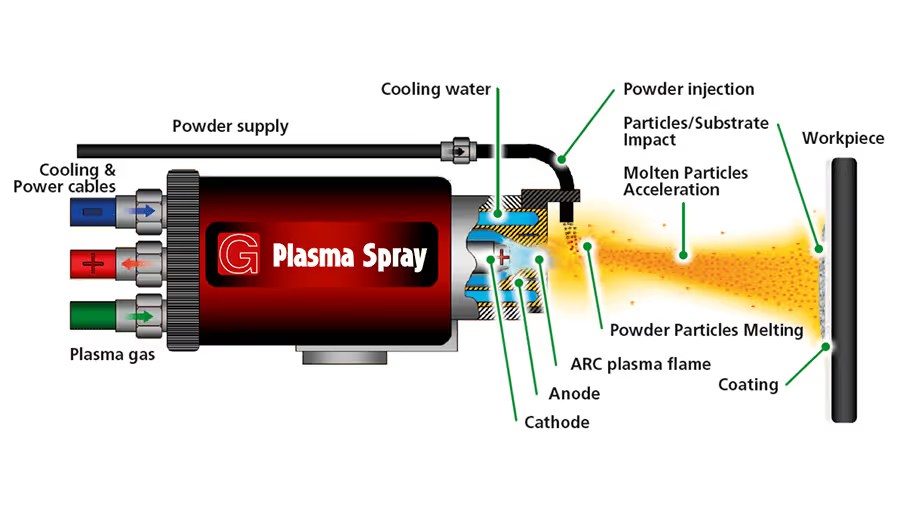
In a plasma spray gun a plasma gas is ionized between an anode and a cathode. The plasma reaches temperatures between 15,000 and 20,000°C. A coating powder is injected into the plasma jet by a carrier gas, where it melts before depositing on the substrate, the object requiring the coating. The powder particles fuse together on the substrate forming a protective coating.
Because of the high temperature it is possible to spray virtually all existing materials and alloys. Plasma spraying is particularly suitable for materials with a high melting point such as ceramic materials.
Typical coatings
- Ceramic materials (oxides)
- Cermets, Carbides (hard metals)
- Metals and alloys
- Almost all sprayable materials
Plasma Spraying
is used to apply
TOPCOAT
Economic, reliable, versatile ceramic coating for general hydraulic and industrial use – since 1987.
TOPCOAT+
Enhanced ceramic coating with superior corrosion and chemical resistance.
TOPCOAT ULTRA
This ceramic coating is mainly used to withstand severe chemical and corrosive environments.
TOPCOAT ULTRA+
Ultra-dense ceramic coating with unbeatable wear, chemical and corrosion resistance.
Request we contact you
Request Quotation
Fill out the form to request a quote.
Request a quote