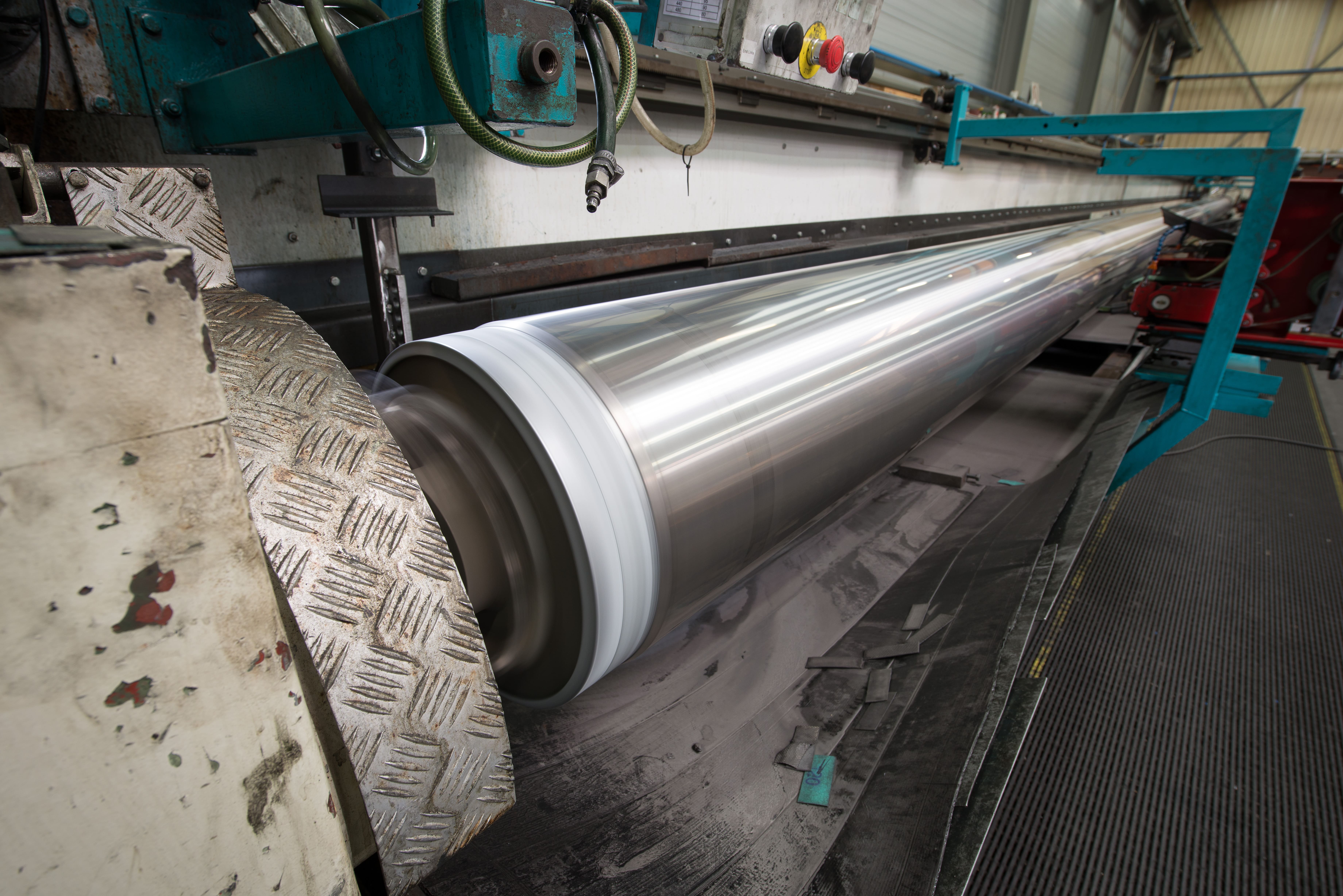
Hard chrome plating has been the default wear-resistant coating for hydraulic and marine components for decades. As the industry looks for alternatives, thermal spray coating, and specifically HVOF and plasma spraying, has become the leading replacement. The two processes look similar from the outside, a spray gun, a heated stream of material, a coated part at the end, but the physics behind them, and the choices they force on a coating specifier, are anything but simple. Understanding how the process actually works helps explain why it performs the way it does, and which variant fits which application.
What is chromium plating, and how does thermal spray replace it
(Nickel) hard chrome plating is applied through electroplating: a component is submerged in a chromium bath and an electrical current deposits a layer of chromium onto its surface, ion byion, until the desired thickness builds up. The result is a hard, wear-resistant layer that has served industry well for decades, and one of the reasons it lasted so long is that the process itself is relatively simple and the equipment is cheap to run.
Thermal spray coating achieves a similar end result through a completely different mechanism. Instead of depositing metal from a solution, a spray gun heats a powder or wire materialwell past its melting point and accelerates the molten particles at highvelocity or temperature toward the component. Each particle flattens on impact, cools almost instantly, and bonds mechanically and metallurgically to the surface and to the particles around it. Repeat that millions of times per second across the surface, and a dense coating builds up layer by layer.
There are several thermal spray techniques on the market, but for replacing hard chrome plating on wear-critical components, two are relevant: HVOF (High Velocity Oxygen Fuel) and plasma spraying. Other thermal spray variants, such as flame wire or arc wire spraying, serve different applications and fall outside this comparison.
HVOF for carbide coatings, plasma for ceramic coatings
The choice between HVOF and plasma comes down to the material being applied, and more specifically, to how much heat that material needs to melt.
Ceramic materials are compounds of a metal and oxygen, such as aluminium oxide or chromium oxide. These material shave very high melting points, often well above 2,000°C, and need the extreme heat of a plasma flame, which reaches around 20,000°C inside the spray gun, dropping quickly to a few thousand degrees just outside the nozzle, to melt properly.
Carbide materials, such as tungsten carbide or chromium carbide, are compounds of a metal and carbon. They melt at meaningfully lower temperatures than ceramics, so HVOF, which runs at 2,500 to 3,500°C but propels particles at far higher velocity than a plasma gun, is the better fit. That velocity does double duty: it compensates for the lower flame temperature by adding kinetic energy to the impact, and it also produces a denser, less porous coating, since particles slam into the surface hard enough to flatten thoroughly rather than simply settling on top of each other.
“Normally you have to choose, a coating is either tough or it’s hard, rarely both. Tough coatings tend to be soft, and hard coatings tend to be brittle. Our TOPCOAT 107+ doesn’t force you to choose.It’s a nickel-chromium layer with tungsten carbide worked in at nanoparticlescale, so you get the toughness of that matrix and the hardness of the carbidein one coating, and that’s exactly why its wear resistance comes out so muchhigher than either property would give you on its own.”
Mario van Helmond, CEO Griekspoor Thermal Coatings
In practice, that means a componentdoesn’t have to trade impact resistance for wear life, a compromise mostsingle-property coatings still force on a specifier.
In more than 95% of cases, a coatingis built up as a two-layer system: a flexible, corrosion-resistant bond layer,followed by a harder, wear-resistant top layer.
“If a hoisting chain hits the coating and damages the top layer, you don’t want that scratch to become the start of a corrosion problem. That’s why almost every one of our coatings is built as two layers, a flexible layer underneath to stop corrosion, and a hard layer on topto resist wear.”
Mario van Helmond, CEO Griekspoor Thermal Coatings
Ceramic coatings always need this bond layer, since they don’t adhere well directly to steel. Carbide coatingscan technically be sprayed as a single layer, but the two-layer approach remains standard for the added resilience it provides against exactly the kind of impact damage just described.
Choosing thermal spray over hard chrome plating or hard chromium plating
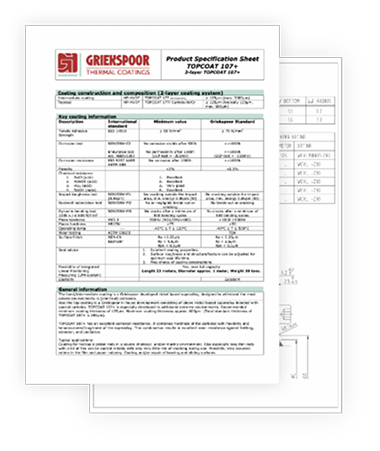
The practical upshot of all this is versatility. Chrome plating only produces chrome: a single material with fixed properties, whatever the application. Thermal spray coatings can be formulated with a much wider range of alloy compositions, which is why five distinctvariants, two ceramic and three carbide, can sit side by side in the same product line, each tuned for a different balance of hardness, toughness, and corrosion resistance, and each documented on its own productpage with a downloadable datasheet.
For a component specifier, this shifts the conversation from “chrome or nothing” to “which coating variant fits this specific requirement”, a question addressed in more detail in HVOF vs hard chrome plating, comparing wear resistance, corrosion protection and hardness. This article is one of six covering different angles on the same shift, see Replacing hard chrome plating: where to start, for the complete picture.