Hydraulic cylinders and piston rods are one of the largest applications for hard chrome plating, and one of the clearest cases for moving to a thermal spray alternative. The failure patterns that show up in the field, not laboratory test results, explain why.
Why hydraulic rods were coated with hard chrome plating in the first place
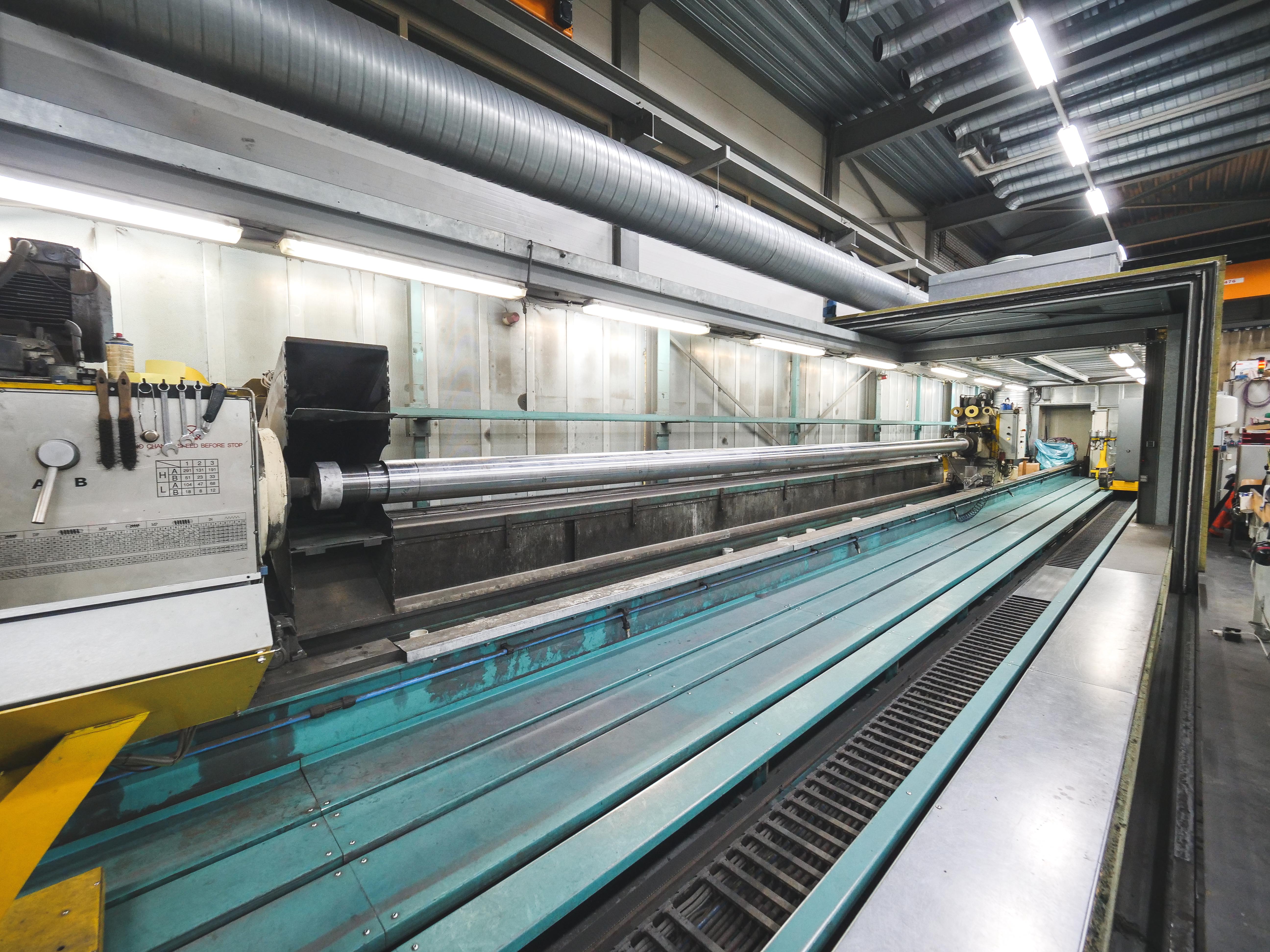
Piston rods move in and out of a cylinder thousands of times over their service life, carrying oil pressure, resisting side loads, and picking up dirt and debris along the way as they extend and retract. (Nickel) hard chrome plating became the standard coating for this application because it offered a hard, wear-resistant, corrosion-resistant surface at a relatively low cost, and for a long time,there was little reason to look elsewhere.
In practice, coating quality is now understood to sit behind the large majority of cylinder failures, roughly 90%by most estimates, whether that shows up as rod damage, corrosion, incorrect surface roughness, seal friction and wear, side-load damage, leaking seals,fluid contamination, or performance loss under extreme temperatures. That statistic matters because it reframes the coating from a minor spec detail into the single biggest lever available for extending a cylinder’s service life.
A few of these failure modes are worth unpacking specifically because they interact directly with coating choice. Fluid contamination happens when a seal wears unevenly and starts drawing in dirt from outside the cylinder rather than keeping it out, and a poor coating surface is often the reason the seal wore unevenly in the first place. Performance loss under extreme temperatures shows up as changes in the oil’s viscosity and the seal’s material properties, which shifts the load the coating and seal have to handle together, sometimes well outside the range either was originally specified for.
Sealing and lubrication: how a hard chrome alternative changes the picture
Chrome plating’s micro-cracks, discussed in the previous article, become a much bigger problem under pressure rather than a purely cosmetic flaw.
“When a cylinder tube is also acting as a pressure vessel, at a hundred, two hundred bar, that tube expands slightly every time it’s pressurised, like a balloon. Any micro-crack already in the chrome layer grows a little bigger every cycle, and eventually that’s your corrosion path. We’ve seen a manufacturer of large hydraulic equipment lose hundreds, if not thousands, of chrome-plated parts to exactly that failure within the warranty period, and after that, they moved their entire product line over to our coating.”
Mario van Helmond, CEO Griekspoor Thermal Coatings
That mechanism, repeated cyclic expansion widening existing cracks, is a form of fatigue, the same basic phenomenon that eventually cracks a paperclip bent back and forth enough times. It also explains why a single isolated flaw in a chrome layer is rarely the real problem on its own, a pinhole in a coating is often survivable in isolation. It’s the combination of repeated pressure cycling and an already-compromised layer that turns a minor imperfection into a warranty claim, which is also why coating failures tend to appear only after months or years in service rather than immediately after installation.
Surface roughness plays an equally direct role in seal life and lubrication, though in the opposite direction: too little roughness causes problems as often as too much. A seal needs a small amount of roughness, sometimes described as oil pockets, to hold enough lubricant to function properly; too smooth, and the seal wears out from lack of lubrication, too rough, and the seal wears out from abrasion, or the assembly leaks outright.
“There’s no single roughness value that works for every seal. Every seal design has its own optimum, if a customer needs Ra 0,2μm and we deliver Ra 0,4μm, they’re not happy with it, even though 0.4 might be perfectly fine on a different seal. We can hold that to about plus or minus 0.05 micrometres of whatever they ask for. We’ve even polished a rod to a mirror finish for a customer who wanted it to look good ona superyacht, it didn’t need to be that smooth functionally, they just liked how it looked.”
Mario van Helmond, CEO Griekspoor Thermal Coatings
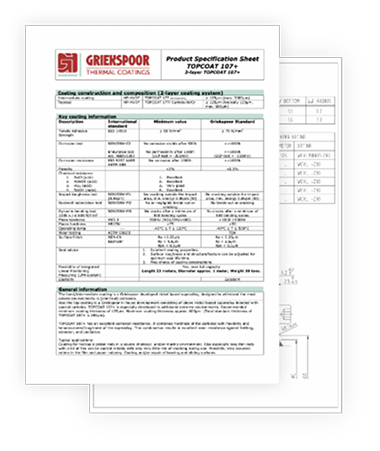
That level of control is what makes a tuned coating process practical across such different requirements, mechanical on one end, purely visual on the other, without treating either as an after thought. The achievable roughness range for each coating, alongside its base hardness and corrosion data, is listed on its product page.
What to check before switching from hard chromium plating
Switching a hydraulic rod from hard chrome to a thermal spray coating does not require redesigning the seal assembly, but it is worth confirming a few things before making the change: the surface roughness your current seal design expects, whether the rod operates under conditions that stress a chrome layer’s micro-cracks, high internal pressure in particular, and what track record the coating supplier has with your specific base material and rod dimensions. None of these checks require special equipment or a lengthy qualification process, but skipping them is the most common reason a coating switch underperforms expectations on the first attempt rather than the coating itself being at fault. The wear-resistance and hardness figures behind that comparison are set out in the previous article, HVOF vs hard chromeplating, comparing wear resistance, corrosion protection and hardness.
Corrosion’s cost is not just a cylinder-level concern either. Researchers at TU Delft have estimated that corrosion prevention and repair costs the Netherlands more than 3% of GDP every year, at least €22 billion. A coating choice that measurably reduces one class of corrosion failure is a small piece of a very large problem, but it is one a component specifier has direct control over. This article is one of six on replacing hard chrome plating, see Replacing hard chrome plating: where to start for the wider picture, including what changes when a worn rod is refurbished rather than replaced, covered in Refurbishing worn hardchrome plating, when to strip and recoat.
neem contact met ons op
Request Quotation
Vul het formulier in om een offerte aan te vragen
Offerte aanvragen